Arts
Animal
Bird
Fish
Monster
Bug
Season
Humor
Early Modern
Modern
About this site
How to order
Contact Us
Search
English
日本語
(
Japanese
)
Japanese arts of animals
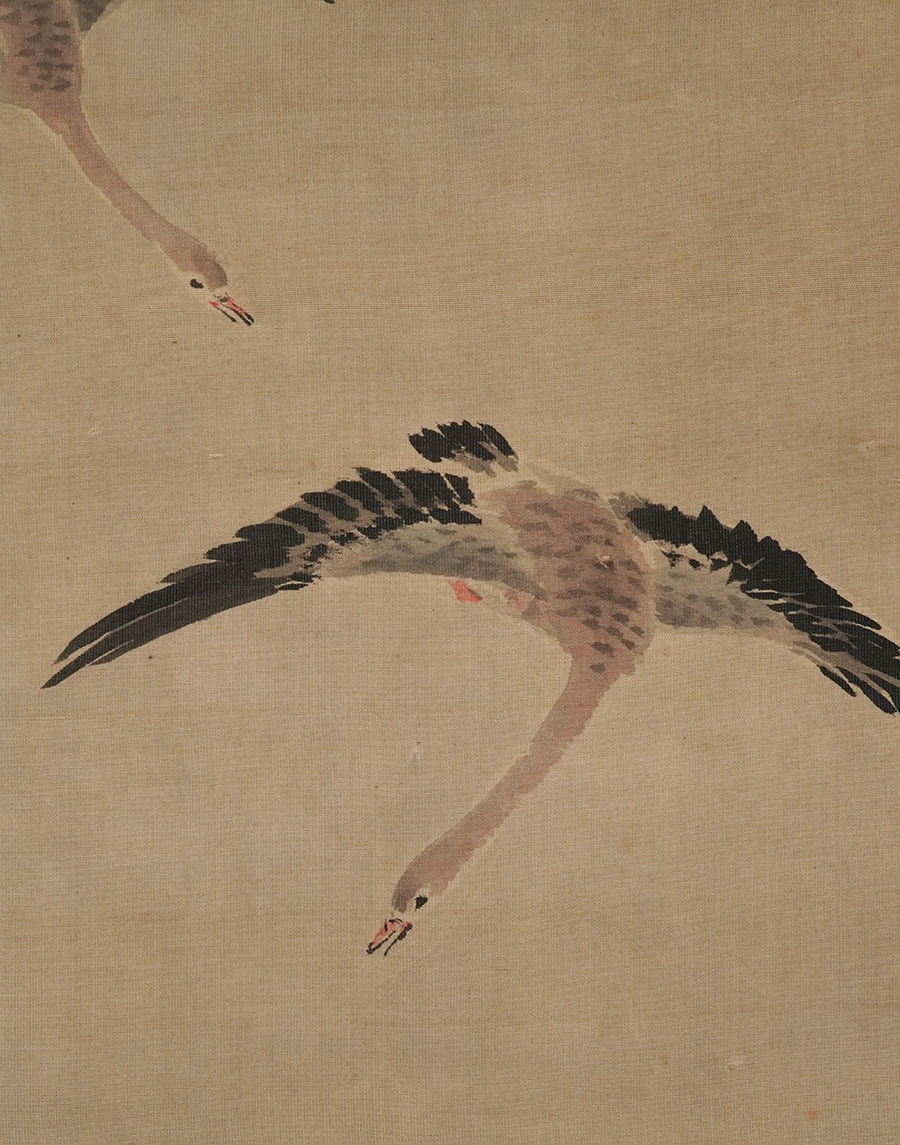
Kano Seisen’in (Osanobu) / Wild geese under the moon
This work is a picturesque and fascinating depiction of the habit of geese flying in a line, with a leader at the front, and while simple, it shows a great deal of training. Seisen’in is also known for having made a huge number of copies of old paintings.
more
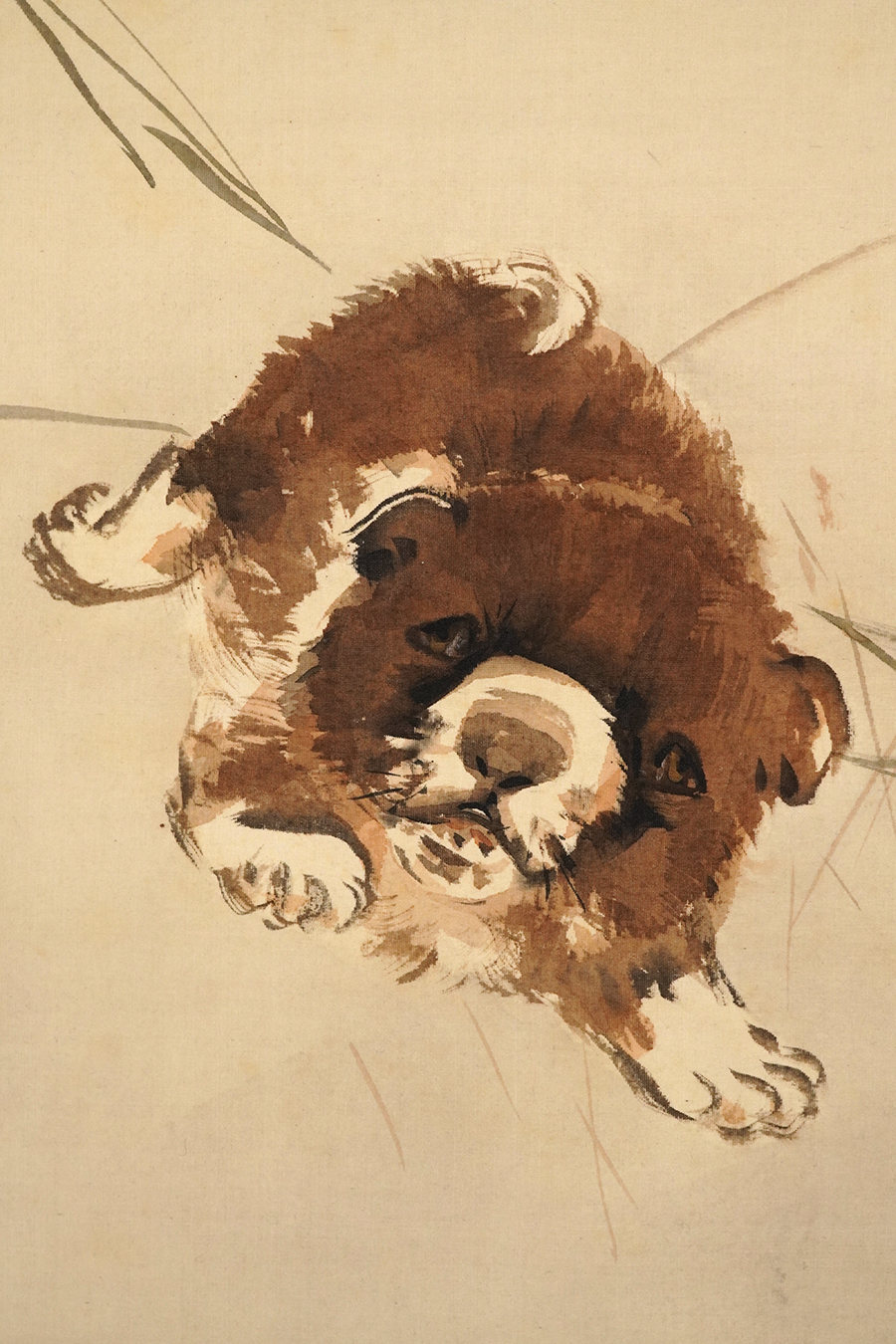
Takeuchi Seiho / Puppy
This is thought to be the same breed of dog that was often painted by Okyo and other artists of the Maruyama school, but Seiho's puppy is slightly more realistic. This is an adorable painting of the puppy gazing at the viewer with a "Found out!" expression, as if it had been discovered playing alone. This work was created when Seiho was 48 years old.
more
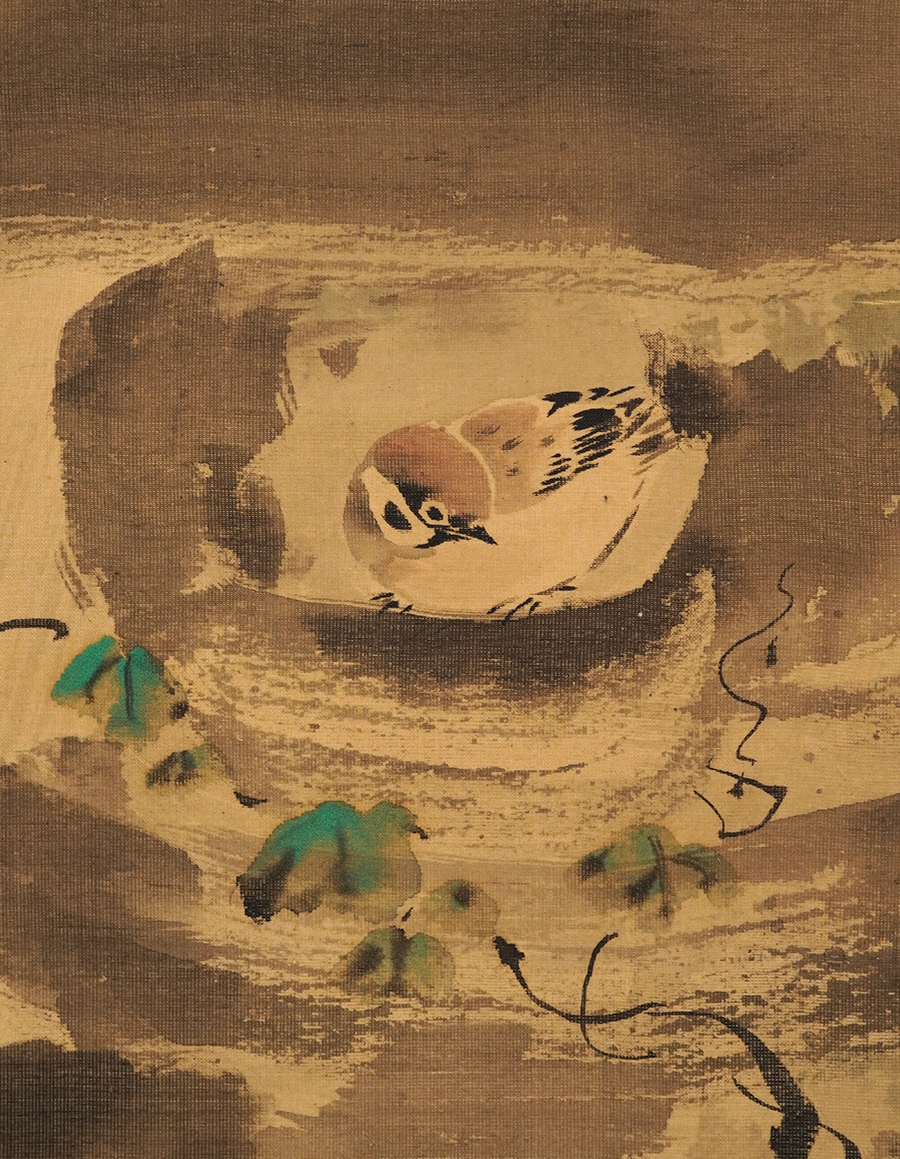
狩野融川 石燈籠雀
This is a hanging scroll by Kano Yusen, depicting an adorable sparrow sheltering from the rain in a stone lantern. The stone lantern is painted boldly with dry brushstrokes to express the rough stone surface, while the entwining ivy is given a fresh look with the use of Tarashikomi ("dripping in"). The inscription on the box, "Bunka 14th year, Fire Ox," suggests that the mounting was made two years after Yusen committed suicide.
more
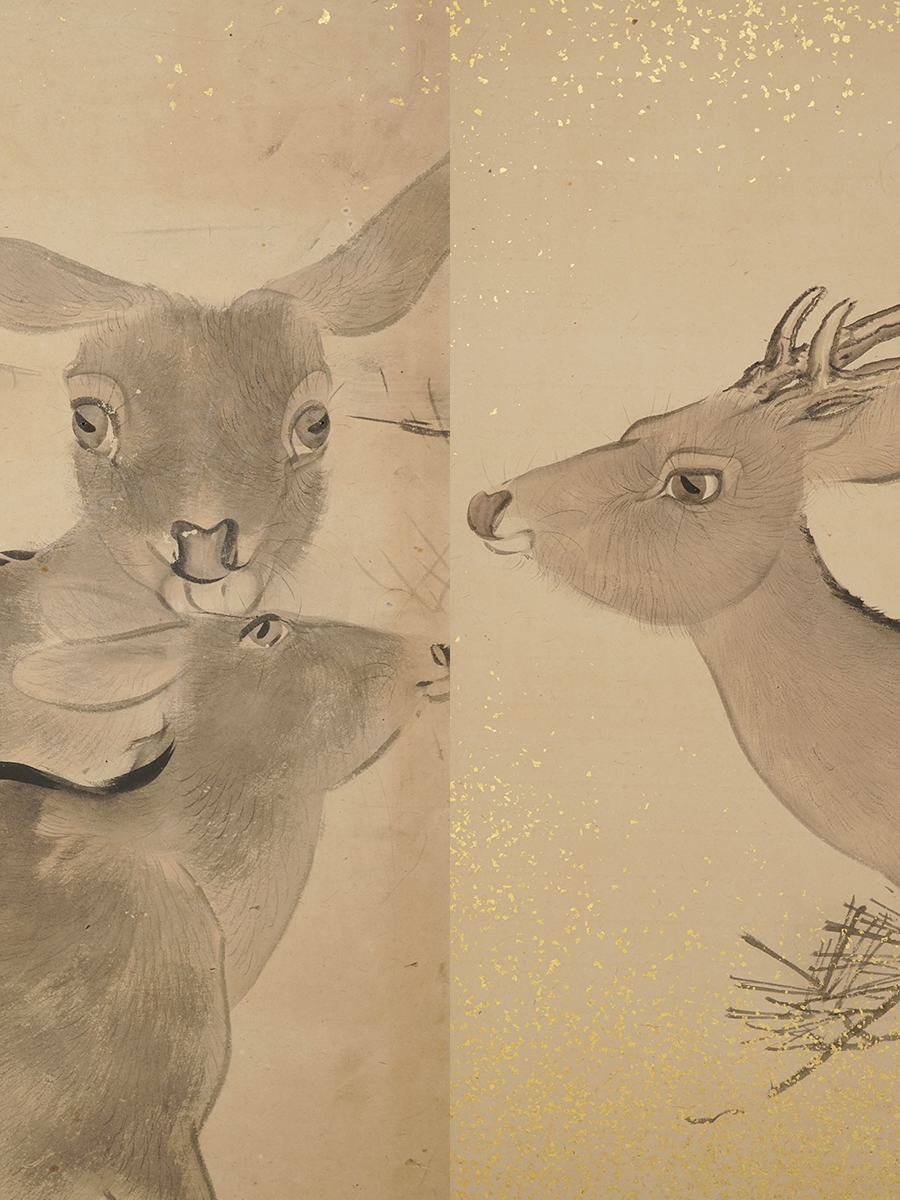
Kishi Chikudou / Parent and baby deer, A pair of six-panel folding screens
Chikudou was one of the three great masters of the Kyoto art world during the Meiji period, along with Mori Kansai and Kono Bairei. He excelled in tiger paintings,but in this work he also fully captures the lively and adorable nature of deer.This work was exhibited at the "Kishi Chikudou and His Art" exhibition held at the Kyoto Prefectural Library and Archives.
more
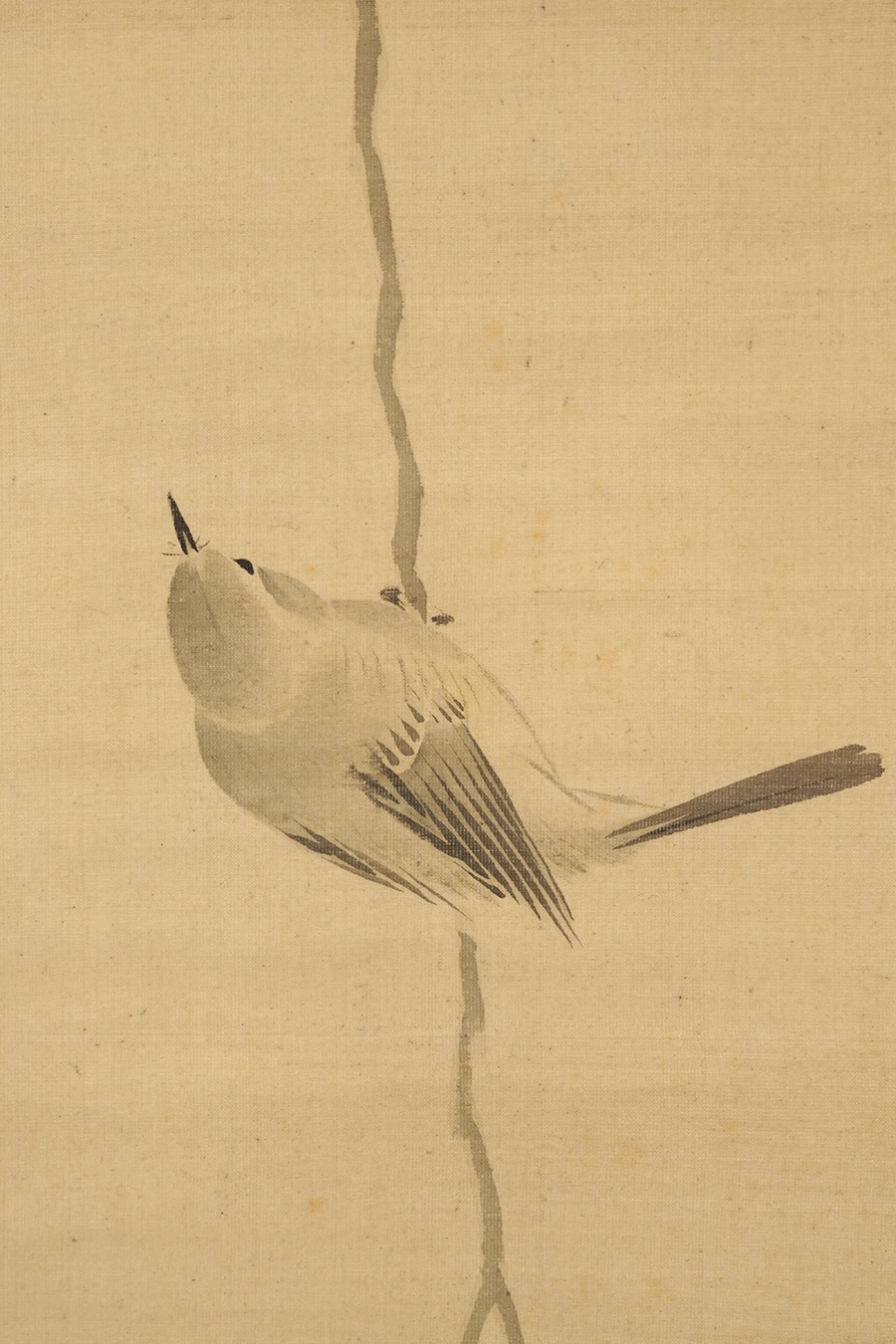
Yoshimura Kokei / A small bird and sunrise
Yoshimura Kokei, one of the Ten Excellent Painters of the Okyo School, is known for developing the more advanced style of Okyo's realism.This painting beautifully depicts the shape of the willow branches using a technique called "tsuketate," which expresses shapes using only the surface of the brush without drawing outlines.
more
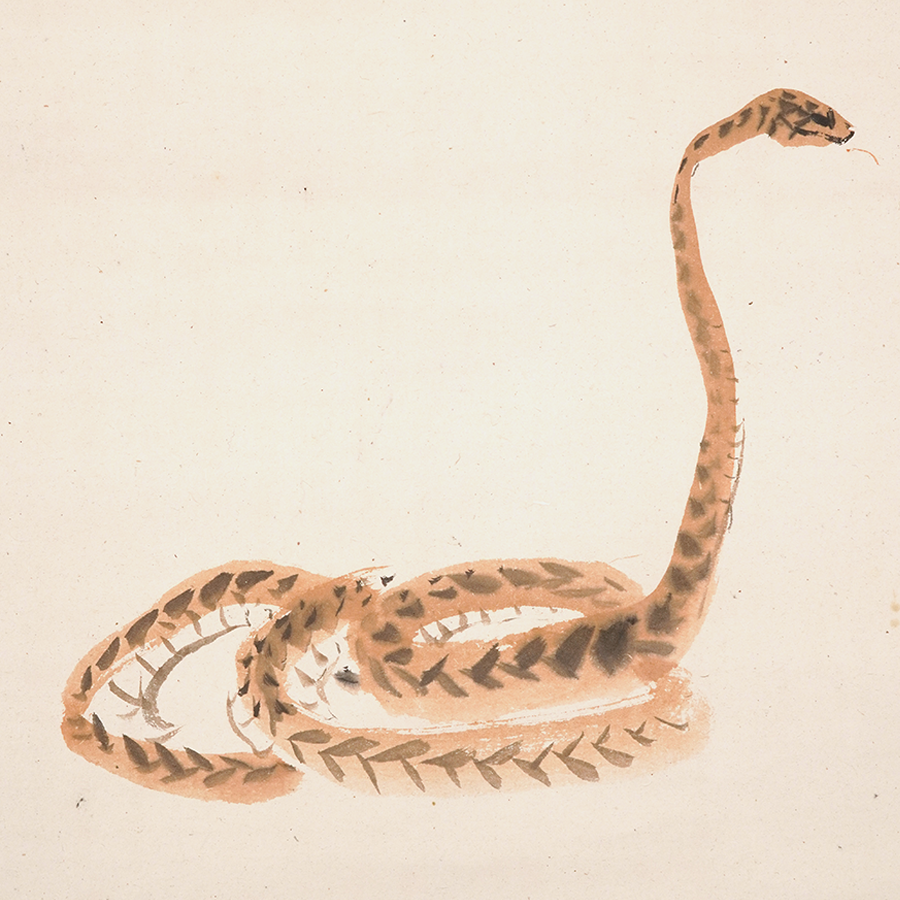
Takeuchi Seiho / Early summer
When it comes to artists who paint dynamic animal paintings, Seiho is an indispensable name. The fast-moving snake is also depicted with Seiho's signature skill, painted in one dynamic stroke.
more
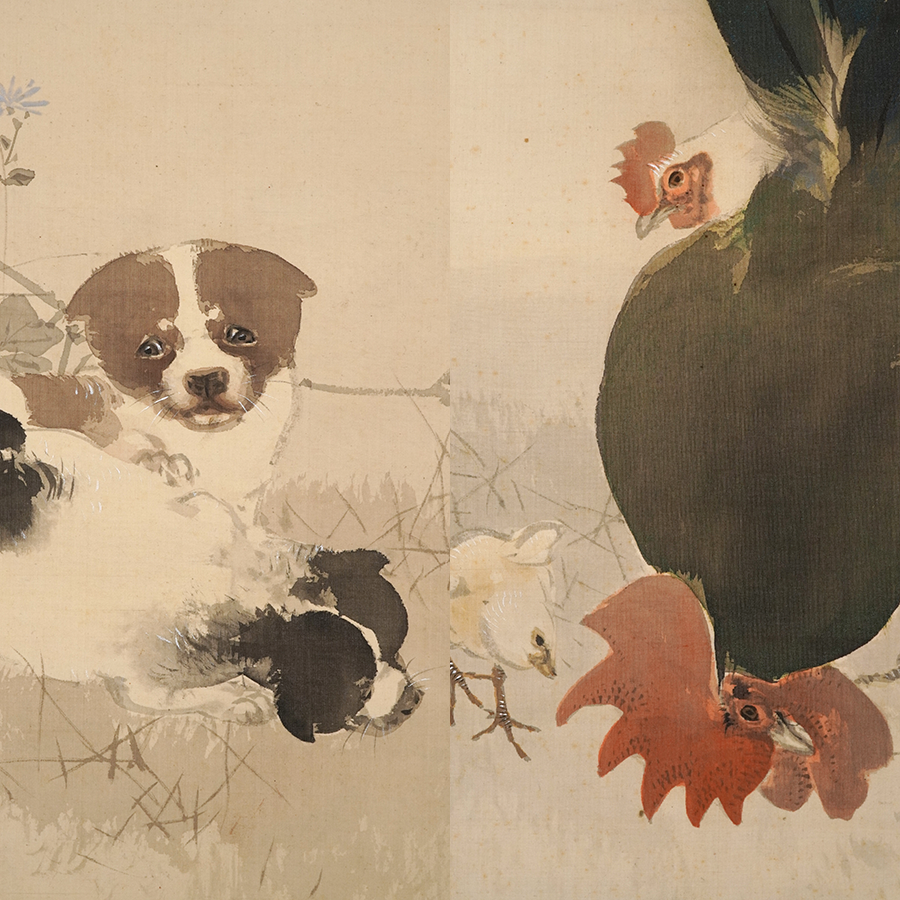
Konoshima Okoku / Two hanging scrolls of Rape blossoms and two chickens, Autumn field and puppy
Okoku's animal paintings are realistic, yet one of their charms lies in the warm gaze toward the animals that can be sensed. This work also depicts family gatherings and puppies relaxing together with a light touch.
more
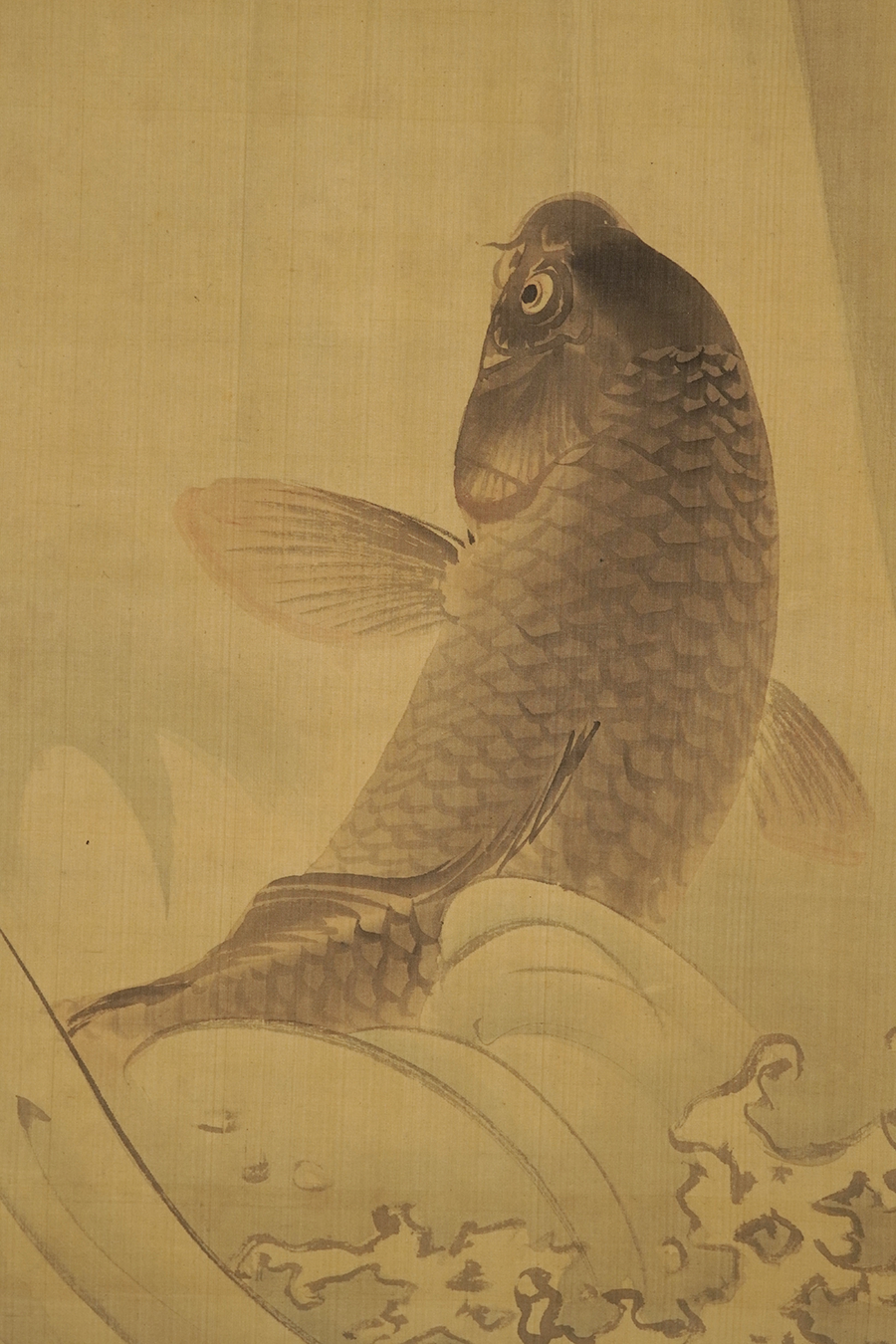
Maruyama Okyo / Toryumon
Okyo's carp are known for their accurate sketching, lively and smooth movements, and sometimes bold composition, which evoke images in the viewer. This work was created when Okyo was 45 years old, the year after he created "Wisteria" (Nezu Museum), an Important Cultural Property.
more
Koike Kyokko / Two Cranes Under Pine Trees
Koike Kyokko is one of the four great painters of the Sendai domain, alongside Azuma Toyo, Sugai Baikan, and Kikuta Ishu. He studied bird-and-flower painting under Shen Nanpin, and although he followed his style, Kyokko's brushwork is gentle and generous, reflecting his character, which was described as "warm-hearted and sincere."
more
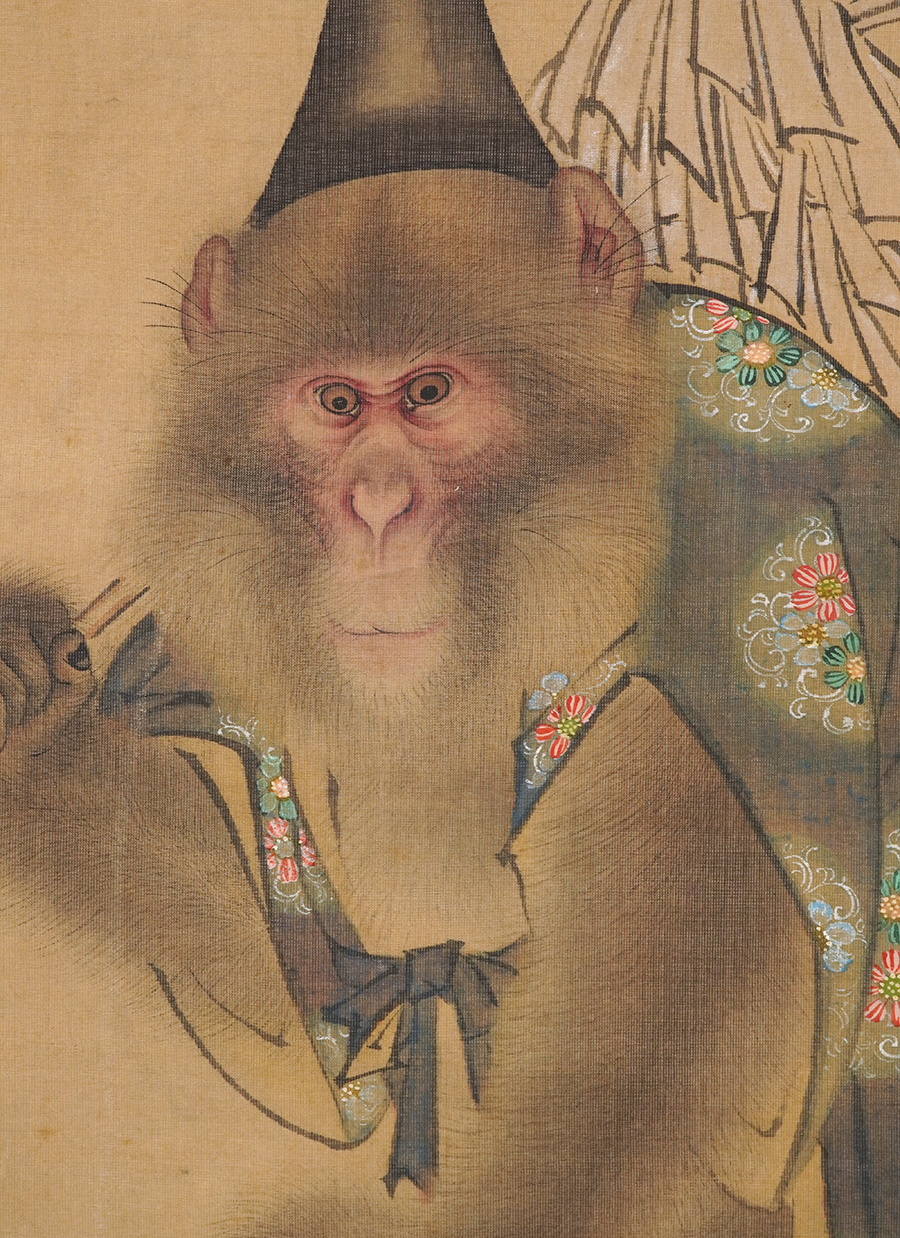
Mori Sosen / Shintoist of monkey
The monkey poses in the attire of a Shintoist. Its restlessness, with its legs crossed as if to hide its embarrassment, is also endearing, and this painting evokes the playful spirit of Sosen, who excelled in monkey paintings.
more
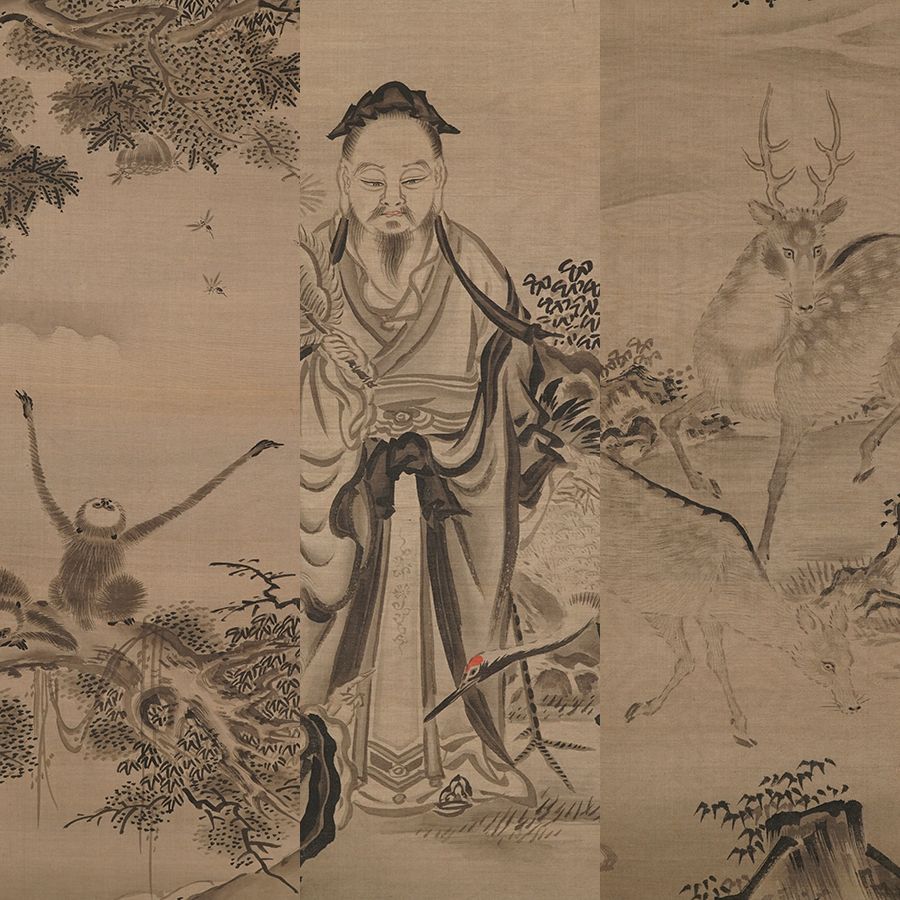
Kano Isen’in / 3 Hanging scrolls of Fukurokuju, Monkeys and Deer
This triptych features subjects such as Fukurokuju, cranes, deer, monkeys, a bat, and pine trees, which embody the three virtues desired in Taoism: happiness, prosperity, and longevity. While the subject matter is historical, it exudes a sense of relaxed cheerfulness and happiness.
more
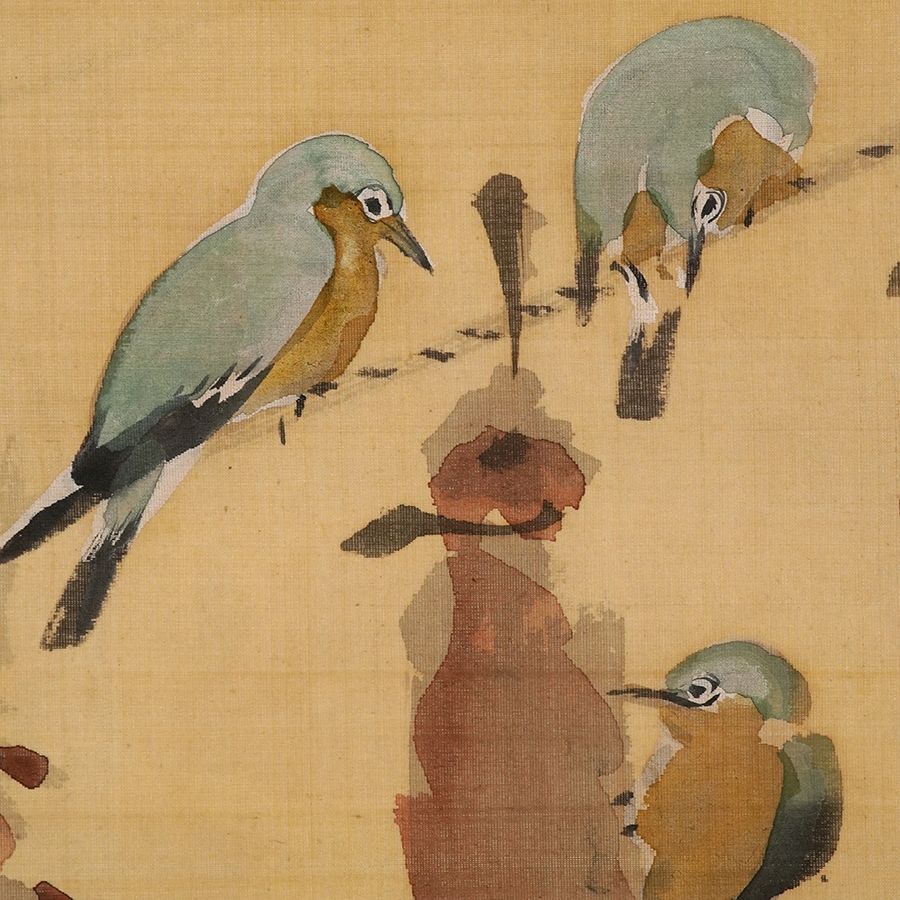
Tani Buncho / White-eyes and dried persimmon
This is an adorable painting of birds pecking at ripe dried persimmons, almost as if it is having a conversation. For Buncho, who was skilled at capturing the fleeting moments of various living creatures, the peaceful daily lives of birds were probably the perfect subject. A lively scene seems to come to mind.
more
Konoshima Okoku / Early summer
Your eyes will be drawn to the cat gazing at you with a meaningful expression. This painting is a vivid and fresh brushstroke that is unique to Okoku, who specializes in animal paintings.
more
Arai Kanpo / Kitten
The cat looks like it is trying to groom itself so intently that it resembles a Hannya, but the overall silhouette and depiction of the hands show that the artist has carefully observed the cat before painting it. After visiting India, Kanpo began to create many Buddhist paintings, but he also created adorable works like this one.
more
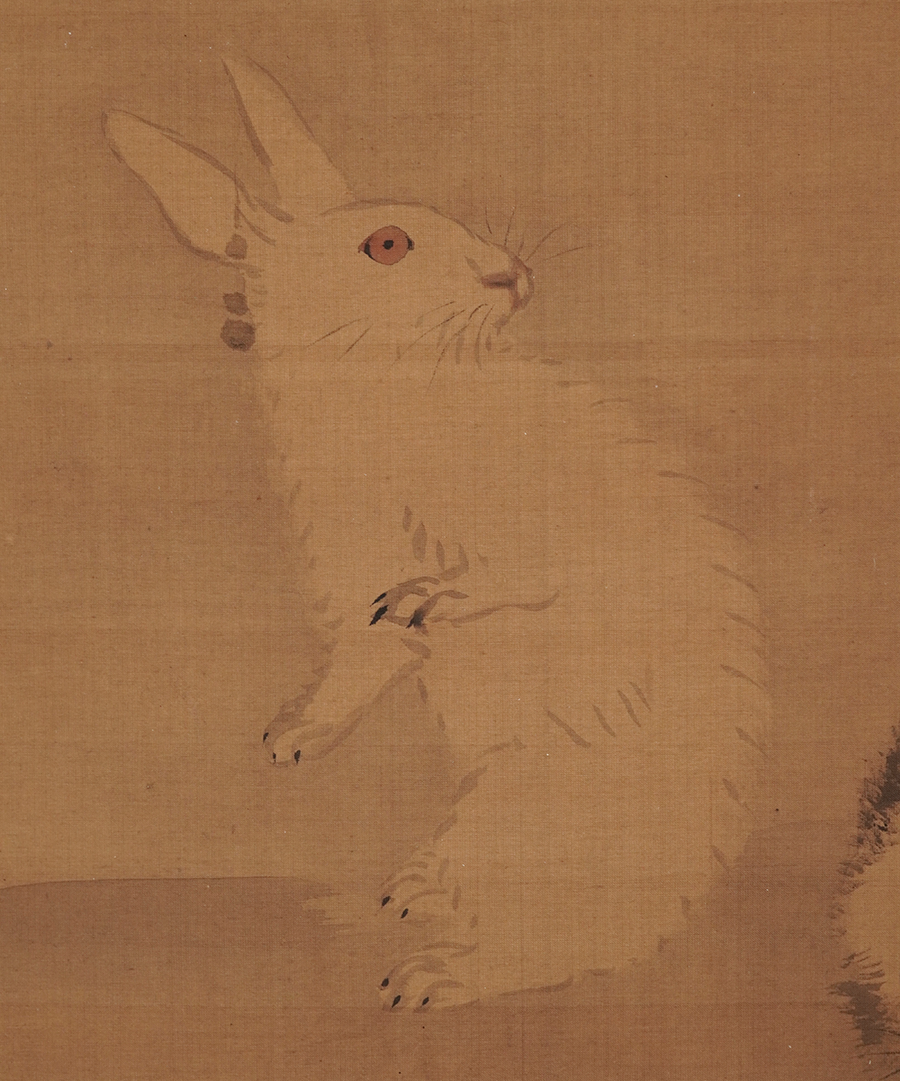
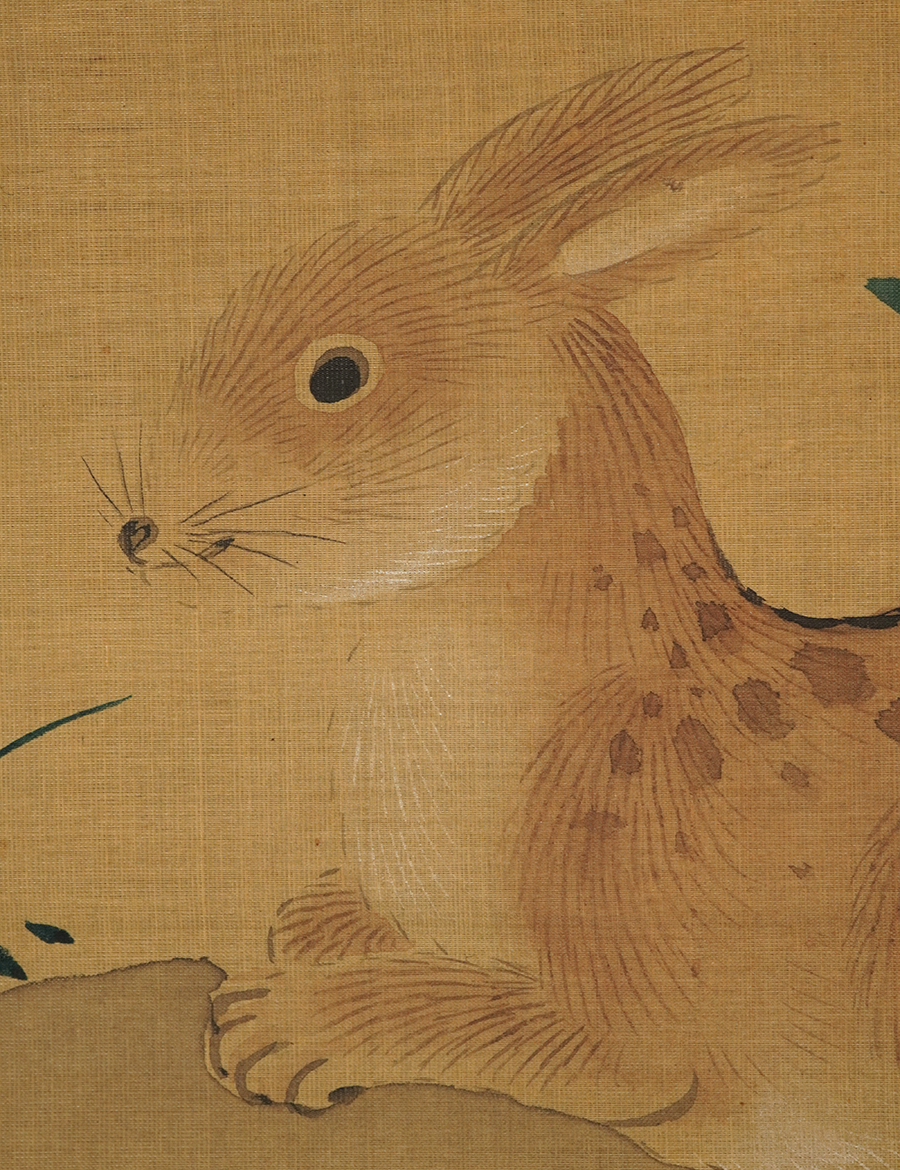
Maruyama Okyo / Playing rabbits
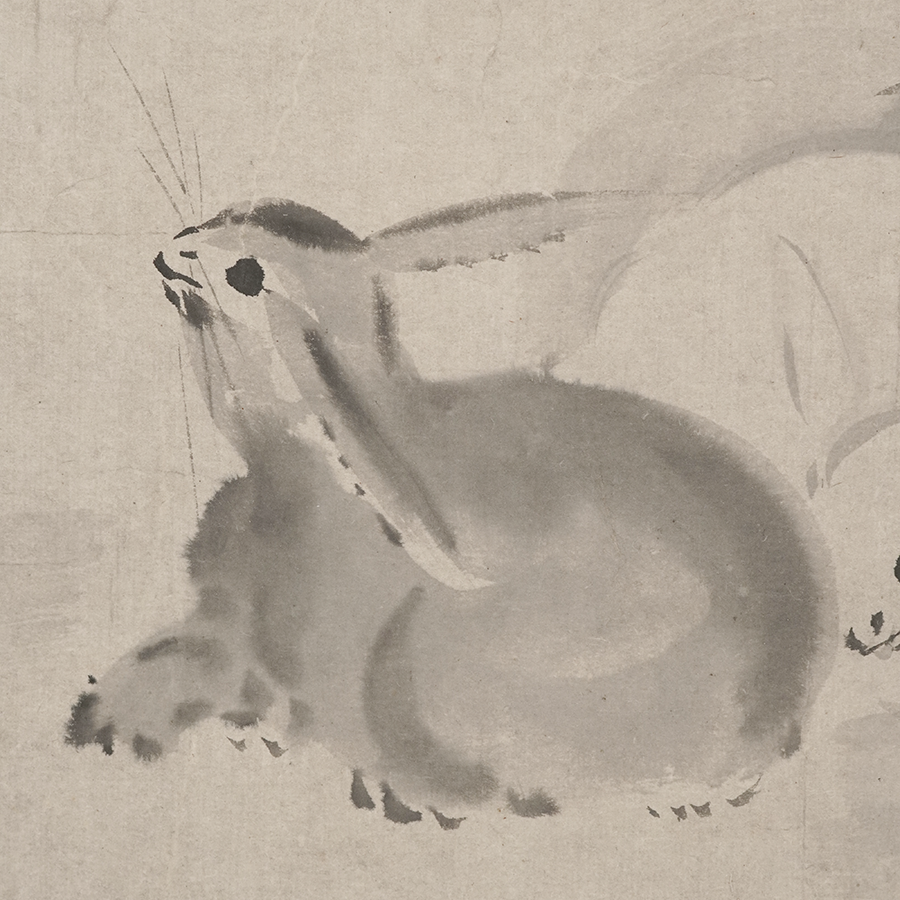
This painting, painted when Okyo was 38 years old, shows brushwork that is more faithful to the real thing than the plump, fluffy rabbits he often painted in his later years. The expression and fur are roughly drawn, but the shape of the ears and the rabbit's movements are captured very well.
more
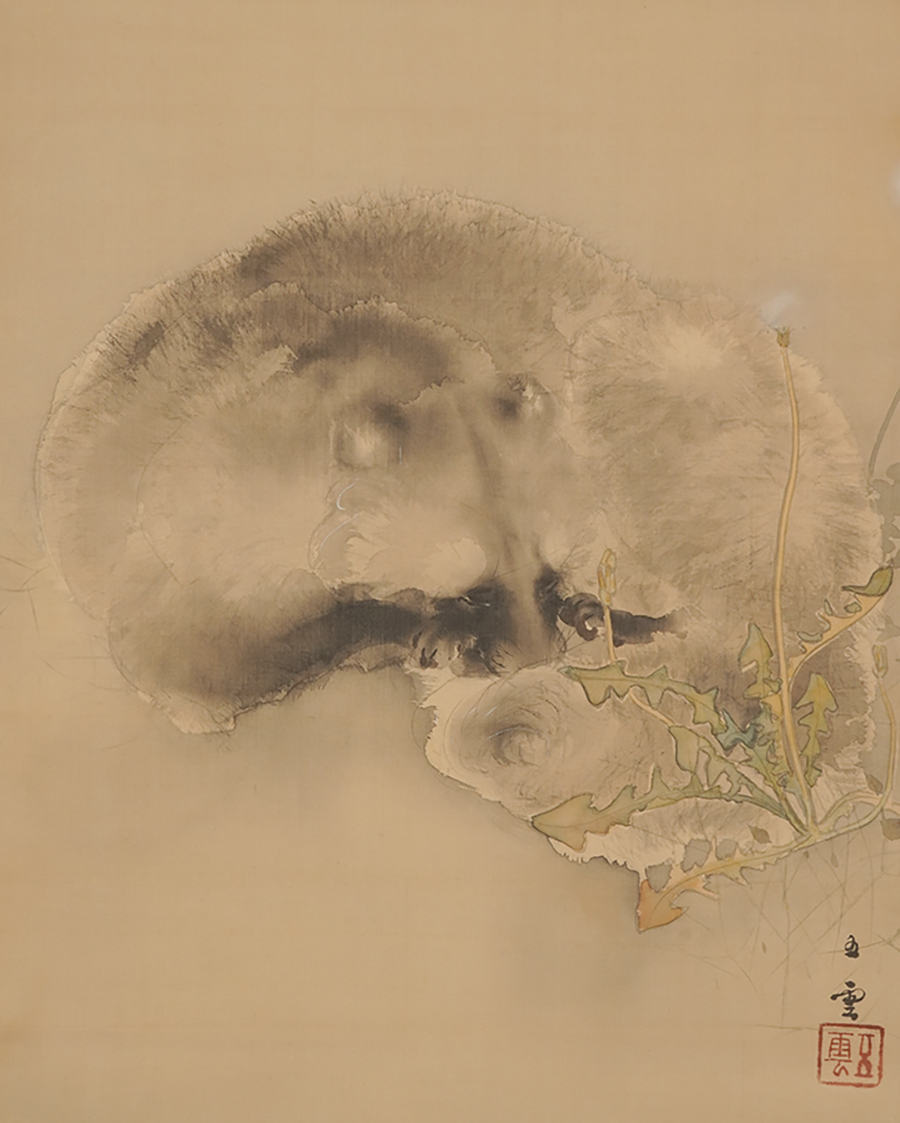
Nishimura Goun / Raccoon dog sleeping under the hazy moon
A lone raccoon dog spends the night under a hazy moon. The dandelions add a touch of color, softening the lonely atmosphere. This is a painting overflowing with emotion, typical of Goun, who excelled in animal paintings.
more
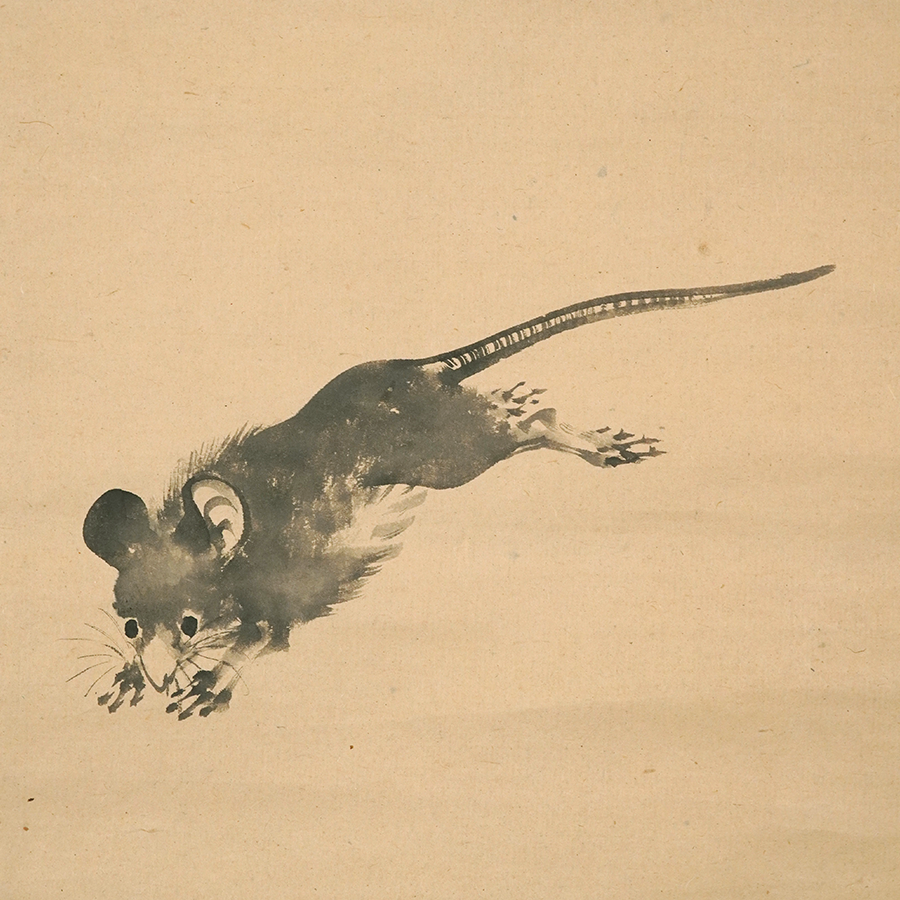
Kono Bairei / A mouse
This is a painting of a mouse by Kono Bairei, an indispensable pioneer of the modern Kyoto art world and the teacher of Takeuchi Seiho. The painting accurately captures the dynamic appearance of the mouse.
more
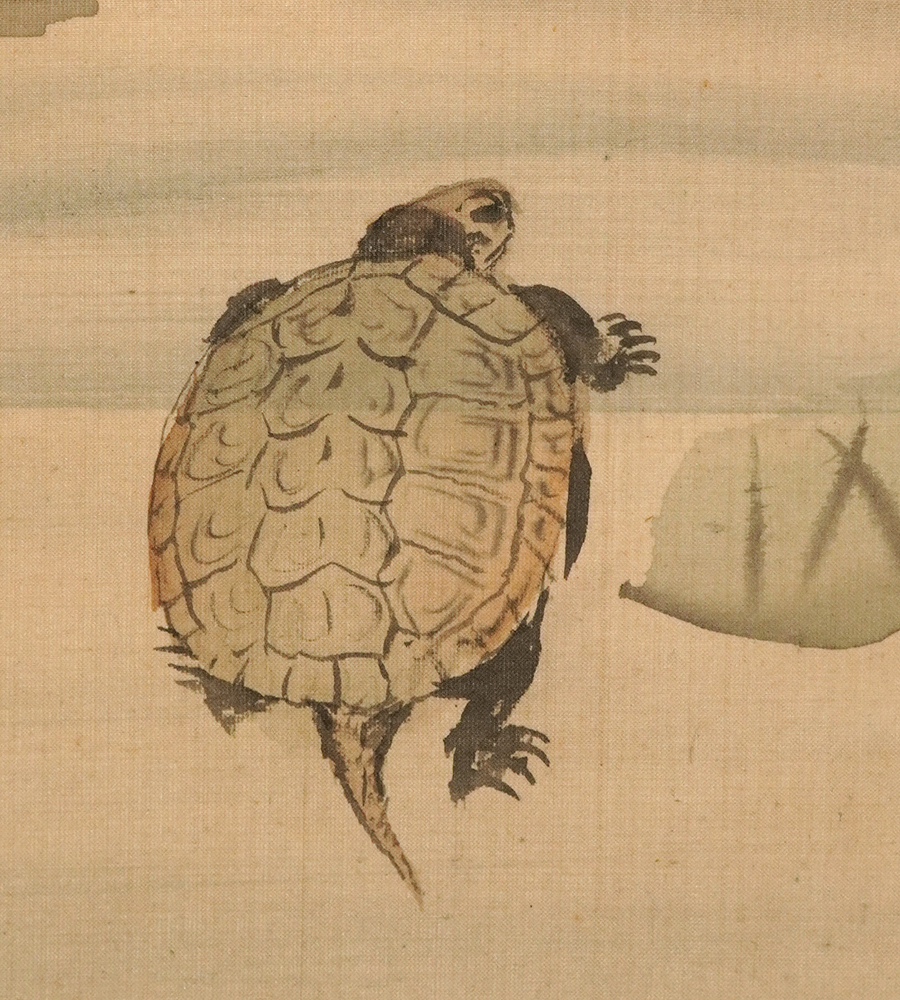
円山応挙 蓮亀図
A turtle swims leisurely in a lotus pond. Okyo left behind many paintings of turtles, but this one is appealing for its light-hearted depiction, as if it were an improvisation. This work was painted in 1783, when Okyo was 51 years old.
more
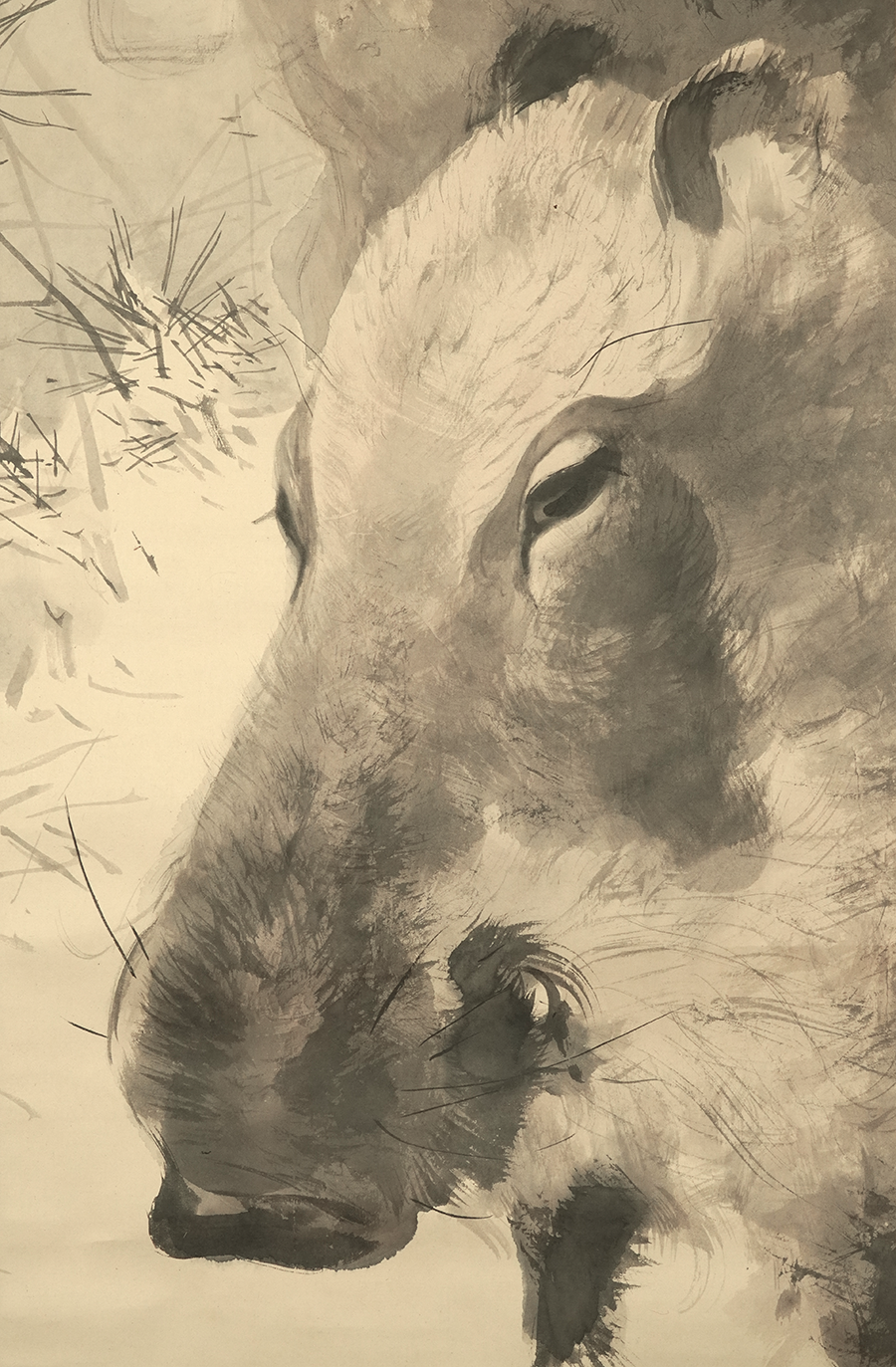
Konoshima Okoku / An old wild boar
Known as "the last of the Shijo school," Okoku left behind many excellent works, particularly those depicting animals. This painting features a skillful spatial composition that gives a sense of spaciousness and depth, allowing you to fully feel the presence and power of the wild boar.
more
Sakai Tadaaki / Rabbits and rough horsetails
Two cute, plump rabbits stand on a small hill. The combination of rough horsetail and rabbits is said to have become popular around the middle of the Edo period as a pattern on kimonos and porcelain known as the "rough horsetail and rabbit pattern.(木賊兎文)"
more
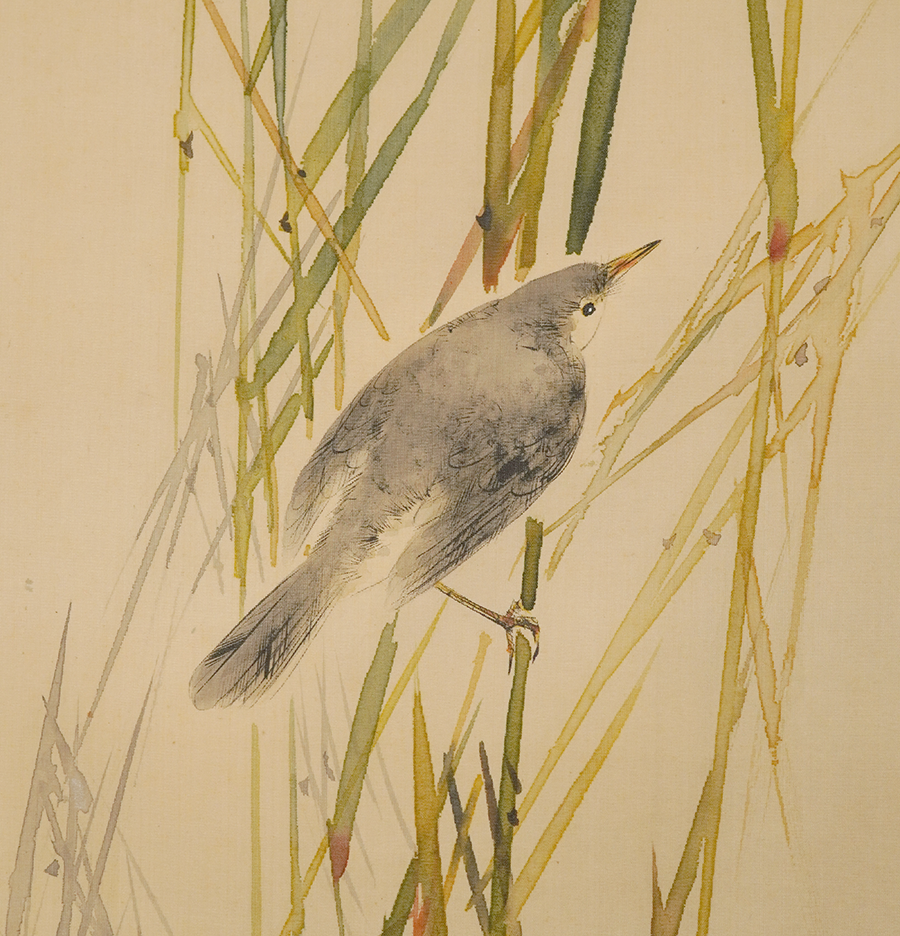
Watanabe Seitei / Little birds under the moon
This painting exudes a sense of tranquility, depicting a faintly rising moon and the birds hanging out beneath it. It showcases Seitei's signature delicate depiction and vibrant, transparent brushstrokes.
more
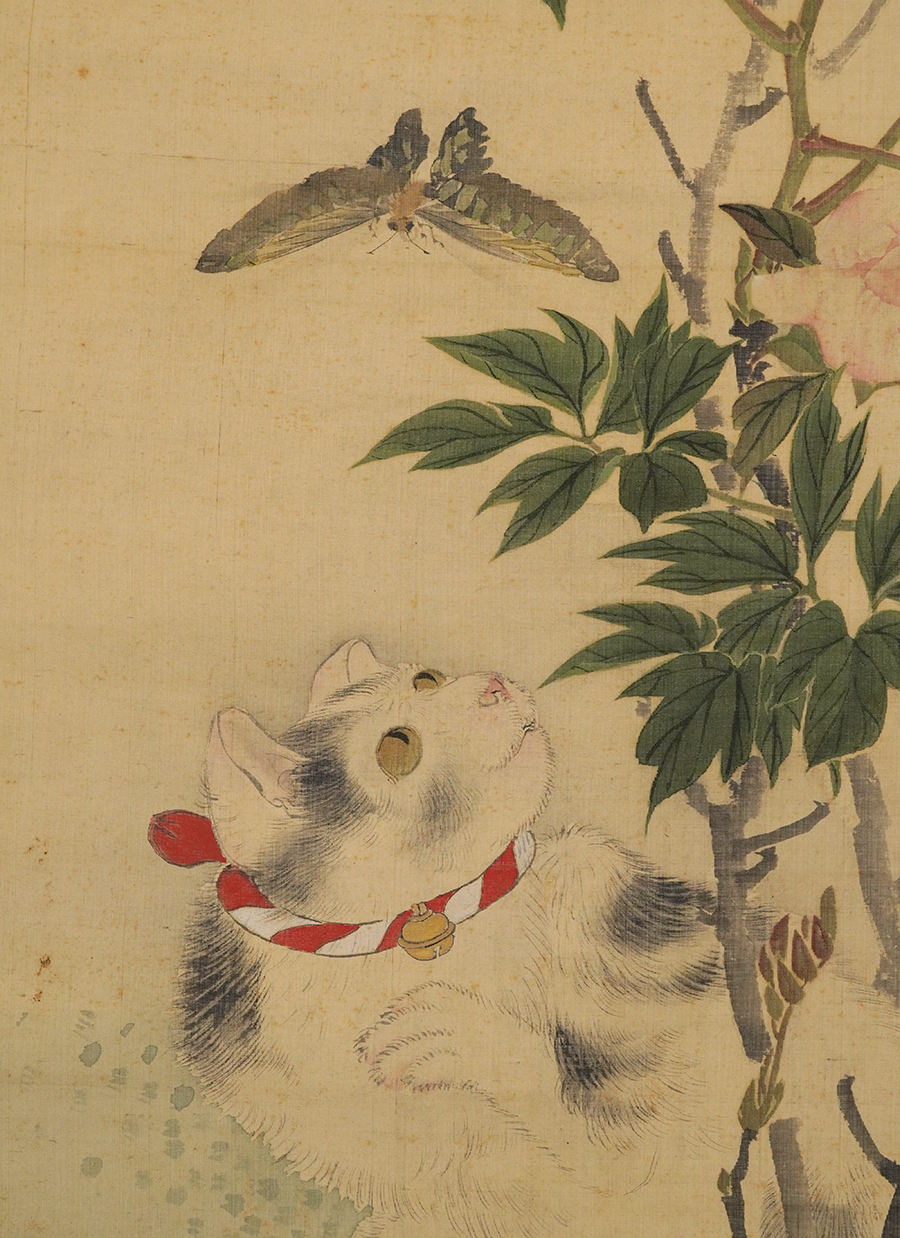
Tanaka Nikka / Peonies and butterflies
A cat playing with butterflies under peonies. Compared to the detailed nature of the peony, the lively butterfly and cat are depicted simply, and this contrast brings a sense of lightness to the picture.
more
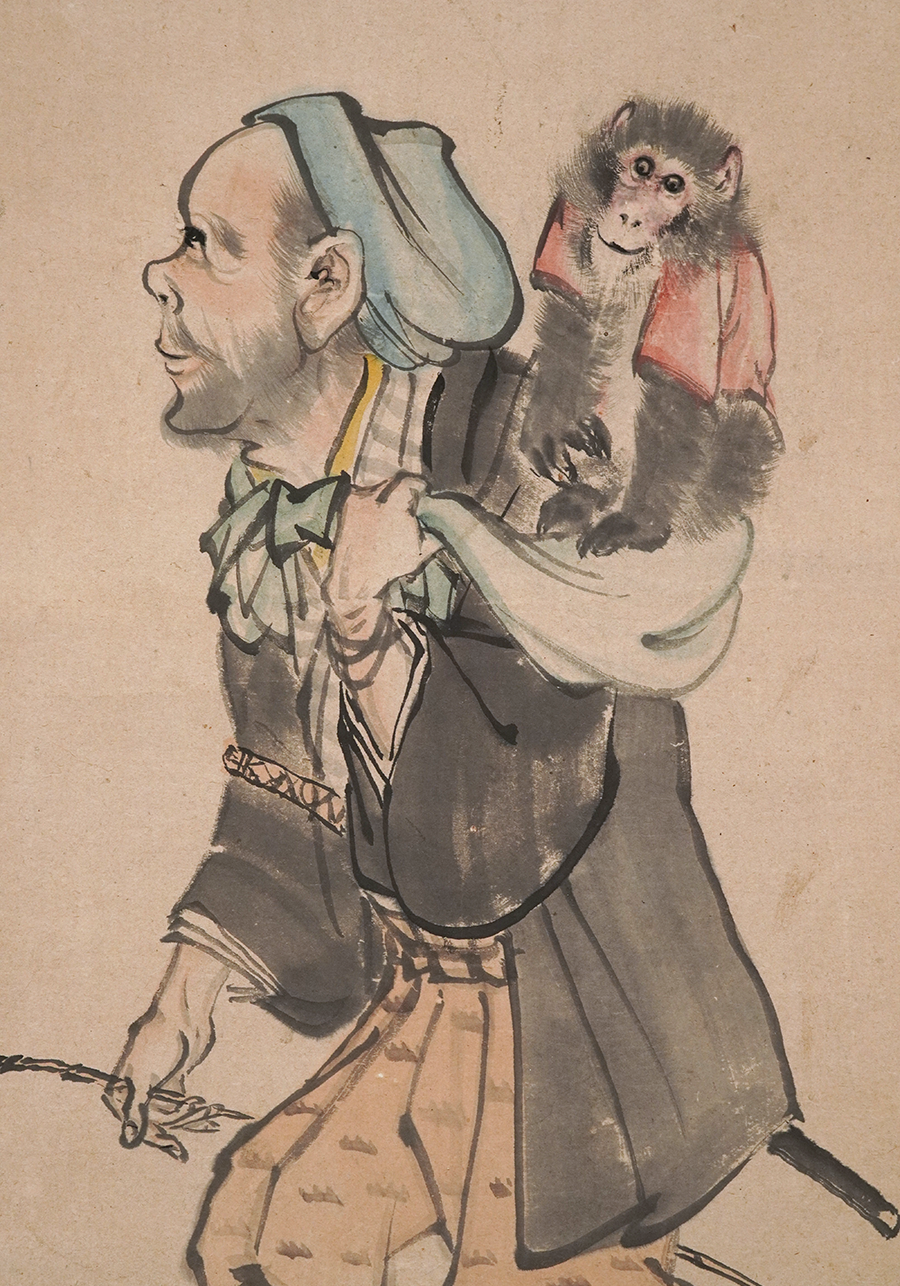
Mori Sosen / Monkey showman
The meticulously rendered monkey by Mori Sosen is fine, but the lightly and gracefully drawn monkey is also quite good. The history of Monkey showman is ancient, said to have begun as a sacred ritual and for warding off misfortune, and by the Edo period it had become a profession directly under the shogunate, widely enjoyed. This piece radiates the trust between monkey and master.
more
Kano Yasunobu / A flock of rabbits
This is a rabbit painting by Kano Yasunobu, the founder of the Nakahashi Kano school. The three rabbits, drawn lightly in light ink, are lined up like a Dango, creating an adorable scene.
more
read more